

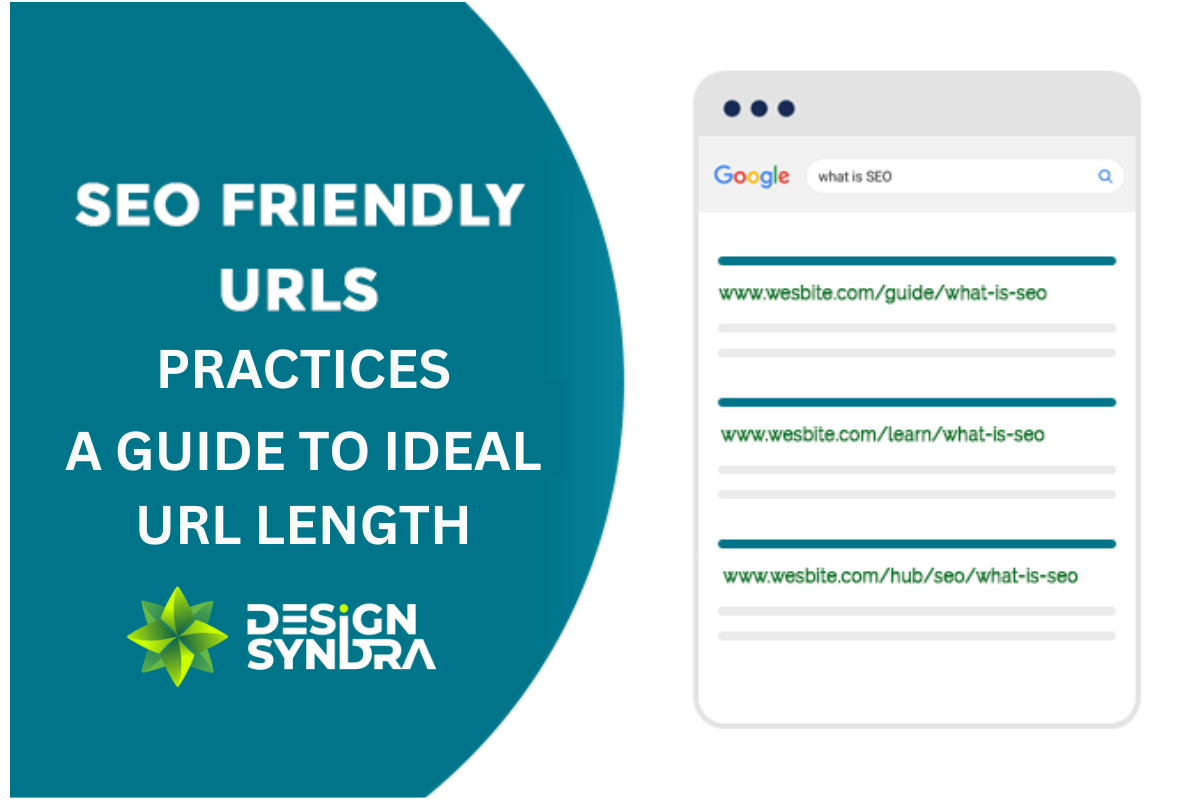
Best SEO-Friendly URL Practices: A Guide to Ideal URL Length
A well-crafted URL may seem like a small detail, but in modern SEO, it plays a bigger role than you might expect. Search engines and users rely on URLs as an early signal of what a page is about. The clearer, structured, and optimized your URLs are, the stronger your chances of ranking well—and improving user experience at the same time.
At Design Syndra, we help businesses create SEO-friendly structures that support organic traffic, improve content indexing, and make every page easier for users to navigate. In this comprehensive guide, you'll learn the best SEO-friendly URL practices, the ideal URL length, and advanced strategies for optimizing your site's URL structure according to Google's latest updates.
Why SEO-Friendly URL Structure Matters for Modern Websites
URLs are more than just web addresses—they help search engines understand page context and influence how users perceive your content.
URLs Provide Early Context for Search Engines
Google analyzes URL text to understand what a page contains. SEO-friendly URLs with descriptive keywords help reinforce content relevance and improve indexing efficiency.
Clean URLs Improve User Trust and Click-Through Rates
Short, readable URLs build credibility. Users are more likely to click when they can instantly understand what the page is about.
Structured URLs Enhance Website Navigation
Organized URL structures help visitors locate content easily and help search engines map site hierarchy more effectively.
Impact on Ranking and Search Visibility
While URLs are not the strongest ranking factor, they support improved relevance signals—especially when consistent with page titles, headers, and content themes.
Understanding the Ideal URL Length According to Google Recommendations
One of the most common questions is: How long should a URL be for the best SEO performance? While Google does not enforce strict limits, research and practical insights reveal useful targets.
Optimal URL Length for Maximum SEO Benefit
Most studies suggest URLs perform best when kept concise—typically under 60 characters—but clarity always outweighs exact character count.
Avoiding Excessively Long URLs
Long URLs may be truncated in search results and create confusion for users, reducing click-through rate and relevance signals.
Keeping URLs Scannable and Keyword-Focused
A well-optimized URL contains the page's primary keyword, written naturally, without stuffing or unnecessary fillers.
Why Shorter URLs Are Easier to Rank
Short URLs make crawling and indexing more efficient and provide cleaner signals about page topic and intent.
Best SEO-Friendly URL Practices for Higher Search Visibility
To build a strong SEO foundation, your URL structure should follow a clean, consistent, and logical format.
Use Hyphens Instead of Underscores
Search engines treat hyphens as word separators, helping them read your URLs accurately.
Stick to Lowercase Characters
Uppercase letters can cause duplicate URL issues on some servers—leading to indexation problems.
Remove Stop Words When Possible
Words like "and," "of," and "the" rarely add value in URLs and can make them unnecessarily long.
Keep URLs Keyword-Specific but Natural
Incorporate your main keyword once, but avoid over-optimization.
Ensure URL Slugs Match Page Content
Inconsistencies between content and URL signals can confuse search engines and users alike.
How to Structure URLs for Better Website Organization
Your URL layout can contribute to how search engines understand your entire site.
Use a Hierarchical Structure for Clarity
A logical structure, such as domain/category/page, helps Google map content relationships.
Avoid Overly Deep Folder Structures
Too many subfolders can complicate navigation and reduce crawling efficiency.
Maintain Consistent Patterns Across the Site
Consistency helps search engines predict content locations and crawl your site more efficiently.
Use Canonical Tags for Duplicate Pages
When pages with similar content exist, canonical URLs prevent indexation of duplicates.
At Design Syndra, we help businesses develop intelligent, SEO-friendly URL structures that enhance both visibility and usability.
Creating Keyword-Optimized URLs Without Overstuffing
Finding the right balance between keywords and clarity is essential for creating strong URL slugs.
Use One Primary Keyword in the URL
Overusing keywords can harm readability and may trigger search engine warnings.
Keep URL Keywords Relevant to Page Title and H1
Alignment between URL, title, and header strengthens semantic relevance.
Avoid Keyword Variants in the Same URL
Only include one version of a keyword to keep URLs clean and natural.
Never Force Keywords—Keep the User in Mind
Search engines prioritize user-first language, especially after Google's latest updates.
SEO-Friendly URL Practices for E-commerce Websites
E-commerce sites often struggle with clean URL structures because of product variants, filters, and dynamic URLs.
Use Static URLs Instead of Dynamic Strings
Static URLs are easier for search engines to crawl and index compared to long parameter-based URLs.
Include Product Keywords for Clarity
URLs should reflect product names clearly and consistently.
Avoid Auto-Generated IDs in Final URLs
Unnecessary numbers or characters reduce readability and SEO value.
Implement Canonicals for Sorting and Filtering URLs
Canonical tags prevent duplicate content issues caused by filter-based URLs.
Design Syndra helps ecommerce brands streamline URLs to strengthen product discoverability and improve user navigation.
Handling URL Changes Without Losing SEO Value
Updating URLs can improve structure, but must be done carefully to preserve rankings.
Use 301 Redirects for Old URLs
Permanent redirects help maintain link equity and avoid traffic loss.
Update Internal Links After Changing URLs
Broken internal links negatively affect user experience and crawlability.
Keep XML Sitemaps Updated
Submit fresh sitemaps to Google Search Console after making changes.
Avoid Frequent URL Changes
Constant updates confuse search engines and weaken content stability.
Common URL Mistakes That Hurt SEO and How to Avoid Them
Many businesses unknowingly create URL problems that hinder SEO performance.
Keyword Stuffing in URLs
Overloading keywords harms readability and may reduce ranking potential.
Using Special Characters
Symbols like &, %, and ! can break URLs or cause encoding issues.
Ignoring Mobile-Friendly URL Structure
Mobile-first indexing requires clean, easily readable URLs for all devices.
Unnecessary Subdomains or Extra Folders
Minimizing complexities helps search engines and users access content faster.
Advanced URL Optimization Strategies for 2025 SEO Standards
As Google updates evolve, so should your approach to URL optimization.
Semantic Keyword Use in URLs
Semantic keywords—related terms that support the main intent—help reinforce relevance.
Incorporating Topic Clusters in URL Organization
Cluster-based URL structures improve content relationships and ranking potential.
Aligning URLs With Search Intent
URLs should reflect informational, transactional, or navigational intent.
Preparing URLs for AI Search and SGE (Search Generative Experience)
Clean URLs with clear meaning help AI-based search systems understand content more accurately.
At Design Syndra, we create URL strategies aligned with emerging trends and future SEO advancements.
Conclusion: Building SEO-Friendly URLs for Stronger Search Visibility
Creating SEO-friendly URLs is one of the most effective ways to improve search visibility, strengthen user trust, and help search engines understand the purpose of your content. Whether you're optimizing for clarity, keyword relevance, or site structure, each detail contributes to stronger performance.
Design Syndra ensures businesses build clean, intuitive, and strategic URL structures tailored to both users and search engines. By following the best URL practices and maintaining consistent optimization across your site, you set the foundation for long-term organic growth and stronger online visibility.